

Security and enterprise risk
Prioritize materialcyber exposure.
Connect vulnerabilities and incidents to the sensitive data, business services, vendors, and downstream dependencies they can affect.
Product evidence
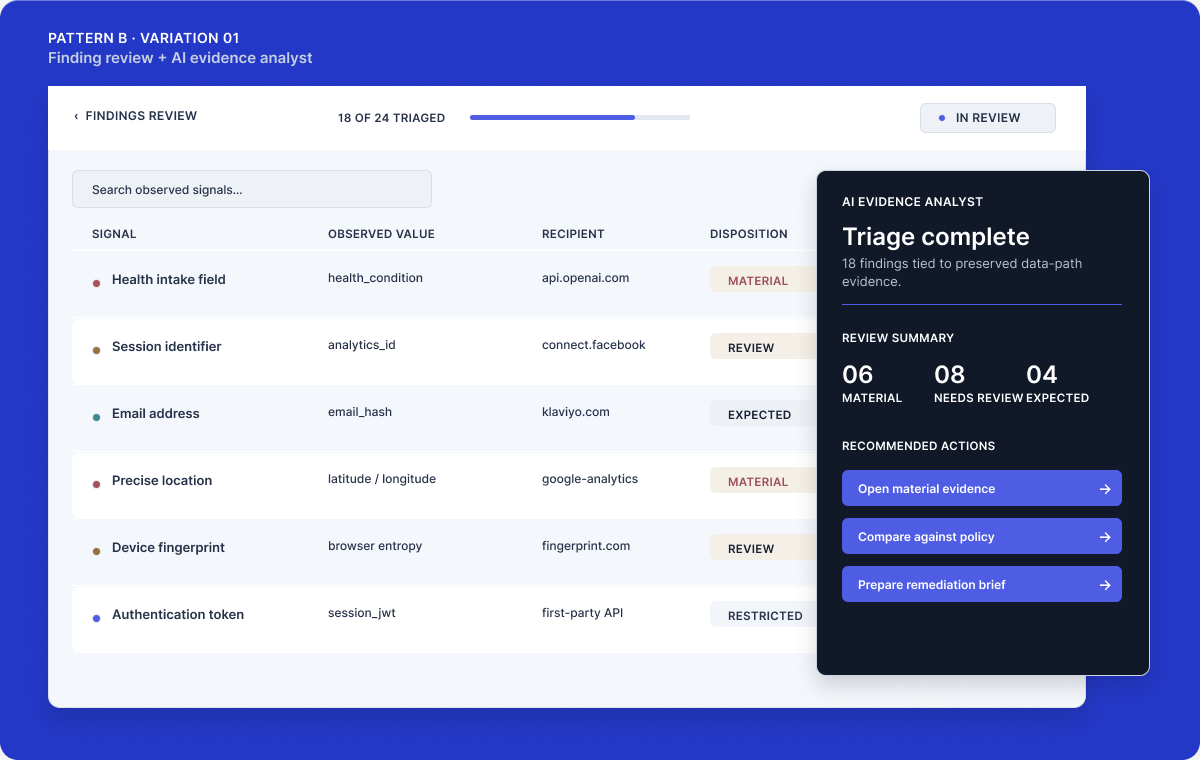
Data + Threatmateriality context
Nth partydependency visibility
Portfolioconcentration analysis
Decision view
Severity is context. Data reach changes the decision.
Move beyond isolated technical findings by showing whether the affected service receives sensitive data, supports a critical journey, or concentrates risk across the enterprise.Enterprise decisionMaterial exposure
Prioritize the issue because it can reach sensitive data through a critical business service.
Owner identifiedAction prioritized
Prioritize material exposure
Distinguish a generic technical weakness from a vulnerability or incident affecting a recipient that handles sensitive customer, employee, health, payment, or credential data.
- Sensitive-data materiality
- CVE and incident context
- Business-impact prioritization
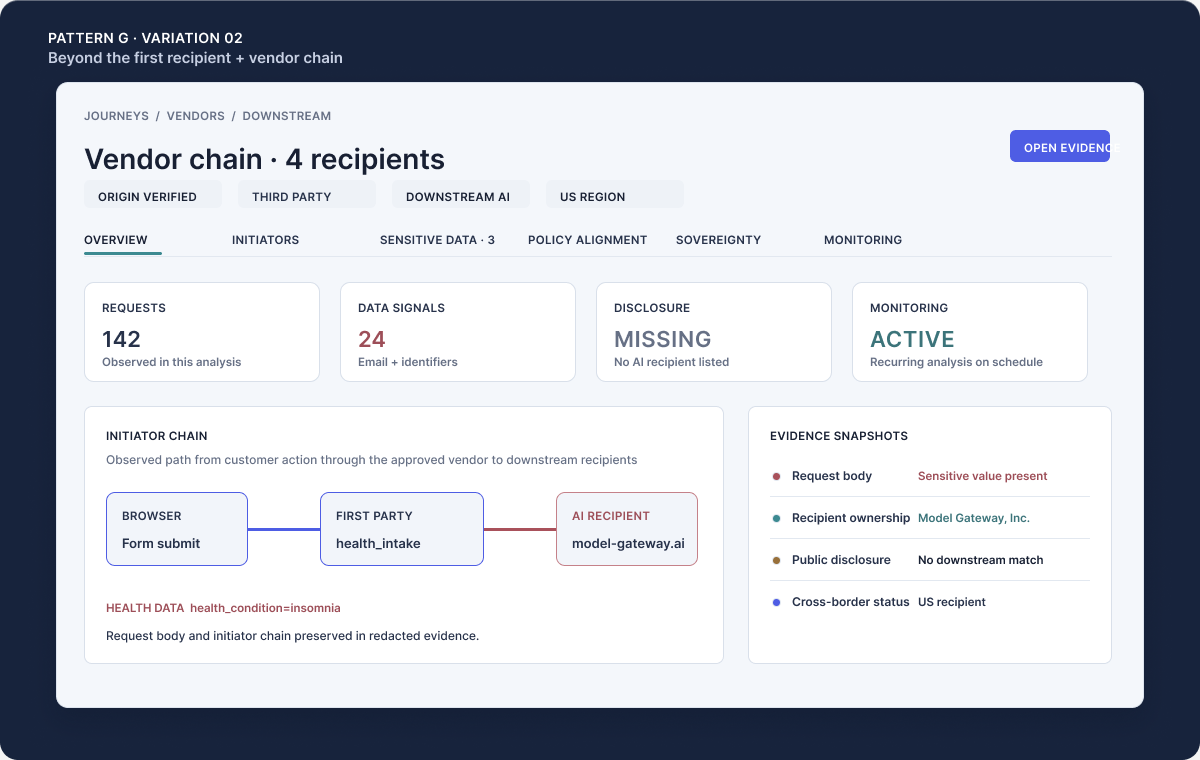
Reveal downstream dependencies
Identify the subprocessors, infrastructure providers, identity services, and embedded AI systems behind an approved vendor relationship.
- Nth-party recipient chains
- Ownership and service role
- Cross-border dependencies
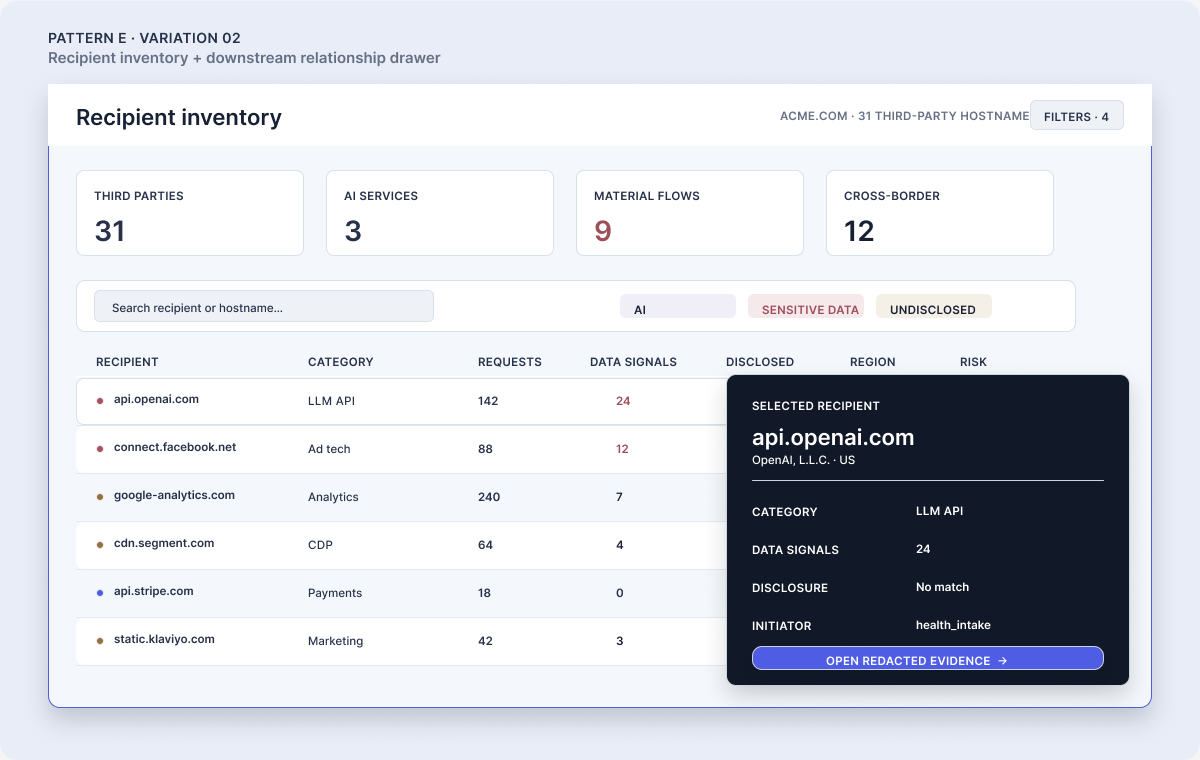
Measure enterprise concentration
Find shared recipients across business units, customer journeys, vendors, and portfolios before one provider becomes a correlated-loss event.
- Shared-vendor exposure
- Systemic dependency context
- Portfolio segmentation
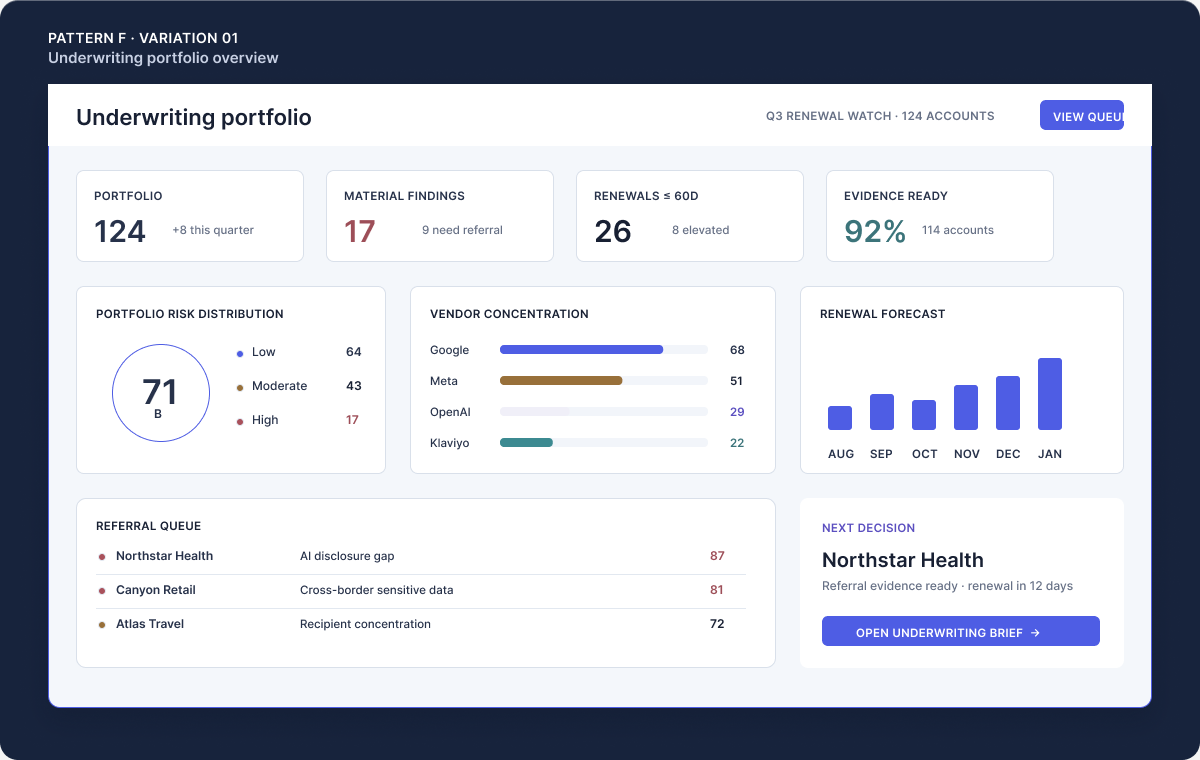
Coordinate action
Give security, enterprise risk, privacy, and business owners the same facts for escalation, remediation, exception handling, and verification.
- Prioritized response
- Evidence-linked ownership
- Verified closure
Data Risk Review
Focus security resources on material exposure.
Start with one enterprise, critical vendor, or portfolio.
Review material exposure Start with one vulnerability, vendor, or business-critical service.